A study recruiting 20 participants who have been diagnosed with luteal phase insufficiency, conducted at a single hospital in England – University Hospital Coventry
MHRA regulatory approval
Rigorous safety standards
Patient-centred
Your wellbeing comes first
Cutting-edge research
Callavid® platform technology

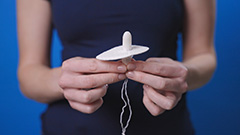
Calla Lily Clinical Care has developed a vaginal drug-delivery device called Callavid® with the aim of improving women’s experience when using prescribed vaginal progesterone.

With over £1 million secured from the NIHR i4i programme – the UK's leading funder of health and social care research – this technology is now undergoing further development and clinical evaluation.
Why is this research important?

NICE guidelines recommend* offering vaginal micronised progesterone 400mg twice daily as management for threatened miscarriage to women with an intrauterine pregnancy confirmed by a scan, if they have vaginal bleeding and have previously had a miscarriage.
*NICE (UK) guideline (NG126), 24 Nov 2021 update
Women affected by miscarriage annually in the UK[1]
Annual cost to NHS and economy from current pessaries [2]

The challenge
Miscarriage affects over 150,000 women each year in the UK. Administering doses of vaginal micronised progesterone is the NICE-recommended guideline for women who have suffered at least one miscarriage and subsequently face "threatened miscarriage", the clinical term for when there is bleeding during early pregnancy.
Current treatment limitations
The current method of delivering vaginal progesterone through pessaries can cause considerable distress and inconvenience to women due to leakage and concerns about correct placement in the vagina. To avoid leakage of the prescribed medication before it has been absorbed into the body, many women lie down for an extended period after inserting each pessary. According to health economists, the avoidable cost to the economy and the NHS from the use of leaky progesterone pessaries for miscarriage prevention and IVF across England and Wales is £236 million per year.
Why this research matters
This research is important because it explores an alternative way of delivering progesterone, with the aim of understanding whether it can be used safely and whether women find it acceptable and practical to use. Learning from women's experiences at this early stage will help guide future research into better ways of delivering progesterone that fit more easily into everyday life.
The FREEDOM trial
The FREEDOM trial aims to explore whether using progesterone with the Callavid® device is safe, feasible, and acceptable to participants, compared with standard treatment.
“Pessary leakage is a recurring issue amongst my patients, causing acute anxiety and significant inconvenience during a very difficult time. New methods to reduce additional psychological anxiety are badly needed in this field. Through this innovation, one which is being pioneered right here in the UK, I believe there is potential to transform women’s experience.”

Designed with patients, not just for them
Patients and the public have been involved from the very beginning. We want to ensure that our research is designed with patients and not for them; their input is crucial at every stage. Before the funding application we sought experiences and patient journeys of 36 women to get information on how current treatments and care pathways could be improved. For the study we have recruited 14 people to our patient and public involvement (PPI) group who have so far given feedback on the Callavid® prototype and trial design.